

Milton Construction Waste Management Services
Choose us for reliable construction waste management that keeps your site clean, compliant, and environmentally friendly—saving you time, money, and stress on every project.
Get a Free QuoteOur Milton Junk Removal Services
Construction Waste Management in Milton, GA – Local Service Guide
Construction waste management in Milton, GA, requires a tailored approach for both residential and commercial needs. In neighborhoods like Crooked Creek and White Columns, residents often need to dispose of bulky items—such as furniture, mattresses, or appliances—during seasonal cleanouts, home renovations, or after major life events. Local weather and property access, especially in areas with large lots or private drives, can impact logistics and timing. For residential spaces like garages, basements, and yards, spring and fall are peak times for cleanouts, while storm debris and yard waste are common after summer storms or during leaf drop. Commercial properties in Crabapple or along Highway 9 face unique challenges, from office remodels to restaurant upgrades, requiring discreet, timely removal and adherence to operational schedules. Specialty services—like dumpsters for construction debris or coordinated estate cleanouts—are often needed for larger projects or unique property situations. For guidance on local disposal rules and recycling resources, visit the Milton Environmental Programs & Sustainability page.
Key Considerations for Construction Waste Management in Milton
- Timing cleanouts with local weather and seasonal events
- Securing necessary permits for large-scale disposal
- Using approved disposal and recycling channels
- Ensuring property access for large vehicles
- Estimating waste volume for proper container sizing
- Coordinating with local guidelines for specialty items
Benefits of Construction Waste Management in Milton
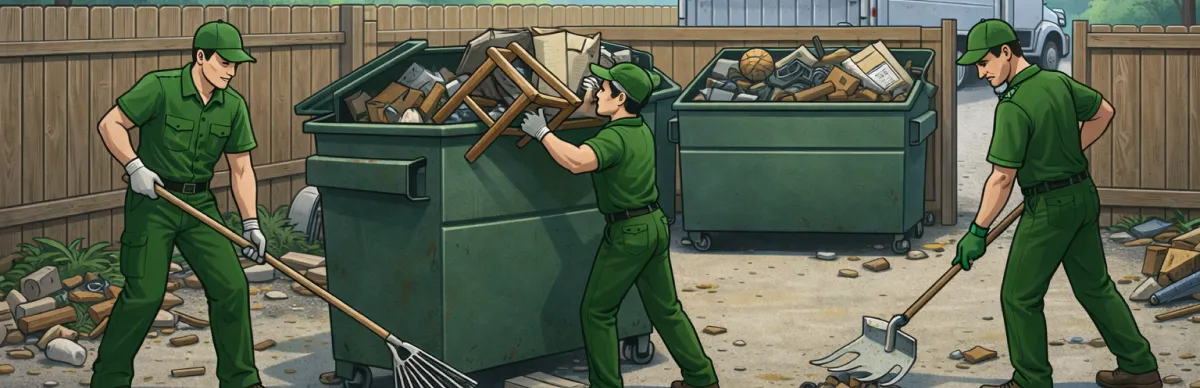
Efficient Site Cleanup
Cost-Effective Waste Disposal
Environmentally Friendly Practices
Regulatory Compliance Assurance
Improved Project Safety
Flexible Scheduling Options
Coordinating Construction Debris Disposal with Milton's Building Division and Public Works Department
Construction and demolition projects in Milton generate significant volumes of waste materials requiring proper disposal coordination between multiple city departments. Before beginning any renovation or demolition project, property owners and contractors must secure appropriate permits through the Milton Building Division, which oversees construction plan review, inspections, and code enforcement for both residential and commercial projects. Key coordination steps include:
- Building permits must be obtained prior to any demolition or major renovation work; applications are reviewed for compliance with local building codes and zoning requirements
- Stormwater protection measures are required on active construction sites to prevent debris and sediment from entering drainage systems
- Debris removal timelines must align with project permit conditions; accumulated waste left on-site beyond permitted periods may trigger code enforcement action
- Hauler verification is recommended to confirm that any contracted waste removal company maintains proper licensing and insurance for operating within Fulton County
\n\n
Milton Building Division
2006 Heritage Walk, Milton, GA 30004
Phone: (678) 242-2500
Official Website: Milton Building Division
\n\n
Property owners should also consult the Milton Public Works Department regarding any right-of-way impacts from construction vehicles or temporary material staging on public roadways.
Georgia's Solid Waste Management Act and Construction Debris Compliance Requirements
Georgia regulates construction and demolition waste under the Georgia Comprehensive Solid Waste Management Act (O.C.G.A. § 12-8-20), which establishes disposal standards, permitting requirements for landfills, and enforcement mechanisms for improper waste handling. The Georgia Environmental Protection Division (GA EPD) oversees solid waste compliance statewide, including construction debris. Milton contractors and property owners must adhere to the following state-level requirements:
- Inert waste landfills accept clean concrete, brick, block, and asphalt; these facilities operate under separate permits from municipal solid waste landfills
- Asbestos-containing materials discovered during renovation of pre-1980 structures must be handled by licensed abatement contractors and disposed of at facilities permitted to accept friable asbestos waste
- Lead-based paint debris from pre-1978 buildings requires compliance with the EPA Renovation, Repair, and Painting Rule, mandating certified renovator practices
- Illegal dumping of construction debris carries penalties including fines up to $25,000 per day per violation under Georgia law
- Yard waste and land-clearing debris generated during site preparation must be separated from construction materials and may not be disposed of in municipal solid waste landfills without authorization
\n\n
Georgia Environmental Protection Division
2 Martin Luther King Jr. Drive SE, Suite 1456, Atlanta, GA 30334
Phone: (404) 656-4713
Official Website: Georgia Environmental Protection Division
\n\n
Material Sorting and Separation Requirements for Milton Construction Projects
Proper sorting of construction and demolition debris is essential for regulatory compliance and landfill diversion in Milton. Fulton County and the surrounding region maintain specific acceptance criteria at transfer stations and recycling facilities, requiring generators to separate materials before transport. Effective material separation practices include:
- Concrete, brick, and masonry should be separated from mixed debris for delivery to inert waste processing facilities, where these materials can be crushed and recycled as aggregate
- Scrap metals including steel framing, copper wiring, aluminum flashing, and iron pipe should be segregated for delivery to licensed scrap metal recyclers
- Clean wood waste free of paint, stain, and chemical treatment may qualify for mulching or biomass processing; treated lumber requires disposal at permitted solid waste facilities
- Roofing shingles (asphalt) are accepted at select recycling facilities in the greater Atlanta metro area for processing into road paving material
- Drywall and gypsum board should be kept dry and separated, as some facilities accept clean drywall for recycling into new products or agricultural amendments
- Mixed construction debris that cannot be separated on-site must be transported to a permitted construction and demolition landfill or transfer station
Contractors working in Milton should consult the Milton Environmental Programs & Sustainability page for current recycling resources and guidance on diversion strategies.
Stormwater Protection and Environmental Safeguards During Construction Waste Removal in Milton
Milton enforces stormwater management regulations to protect local waterways, including tributaries of the Chattahoochee River, from construction-related pollution. Construction waste removal activities must incorporate erosion and sediment control measures to prevent debris, sediment, and pollutants from entering the municipal stormwater system. Required environmental safeguards include:
- Erosion and sediment control plans are required for land-disturbing activities exceeding specified thresholds; these plans must be approved before construction begins
- Silt fencing and sediment barriers must be maintained around debris staging areas and along site perimeters adjacent to drainage features
- Washout containment for concrete trucks and equipment must be established on-site to prevent slurry from reaching storm drains
- Hazardous material containment protocols require that paints, solvents, adhesives, and fuel stored on construction sites be kept in secondary containment to prevent spills
- Site stabilization must occur within required timeframes after debris removal is complete to prevent exposed soil from eroding into waterways
\n\n
Milton Stormwater Management
2006 Heritage Walk, Milton, GA 30004
Phone: (678) 242-2500
Official Website: Milton Stormwater Management
\n\n
Violations of stormwater regulations may result in stop-work orders, fines, and required remediation at the property owner's expense.
Hazardous Materials Handling and Safety Protocols for Milton Demolition Debris
Construction and demolition projects in Milton frequently encounter hazardous materials that require specialized handling, particularly in older structures. Federal and state regulations impose strict requirements on the identification, removal, and disposal of these materials. Critical safety considerations include:
- Asbestos surveys are recommended for any building constructed before 1980 prior to renovation or demolition; if friable asbestos is identified, a Georgia-licensed abatement contractor must perform removal before general demolition proceeds
- Lead-based paint is presumed present in structures built before 1978; contractors must follow EPA lead-safe work practices and use certified renovators for affected projects
- OSHA construction safety standards (29 CFR 1926) govern worker protection during debris handling, including requirements for personal protective equipment, fall protection, and heavy equipment operation
- Refrigerant-containing equipment such as HVAC units removed during renovation must have refrigerants recovered by an EPA Section 608-certified technician before disposal
- Chemical waste including paints, solvents, caulks, and adhesives must not be mixed with general construction debris; these materials require disposal through Fulton County's household hazardous waste collection program
\n\n
Milton Fire Department
2006 Heritage Walk, Milton, GA 30004
Phone: (678) 242-2500
Official Website: Milton Fire Department
\n\n
What Neighborhoods Do We Serve Throughout Milton, GA?
- Crabapple: Milton's historic crossroads district features older structures that may contain lead paint or asbestos requiring pre-demolition surveys. Narrow roadways in the village center may necessitate traffic management plans for construction waste hauling vehicles.
- Birmingham Crossroads: This area includes a mix of established homes and newer developments. Construction projects involving additions or teardowns generate substantial debris volumes, and proximity to Birmingham Road requires coordination for safe truck access.
- Deerfield: Large-lot residential properties with long driveways provide adequate staging space for construction debris. HOA covenants in this community may impose restrictions on debris storage duration and placement visibility from the street.
- Cogburn Road Corridor: Active residential development along this corridor produces ongoing construction waste. Tree conservation requirements enforced by the Milton Tree Conservation program may affect site clearing and debris removal logistics.
- Arnold Mill Road Area: Rural-character properties with gravel driveways and limited turnaround space require advance planning for heavy truck access. Septic system locations must be identified before staging construction debris on residential lots.
- Bethany Bend: Newer subdivisions with wider streets accommodate construction vehicle access, though active neighborhood traffic and school zones may restrict hauling hours. Builders must comply with Milton's noise ordinance for early-morning debris loading operations.