
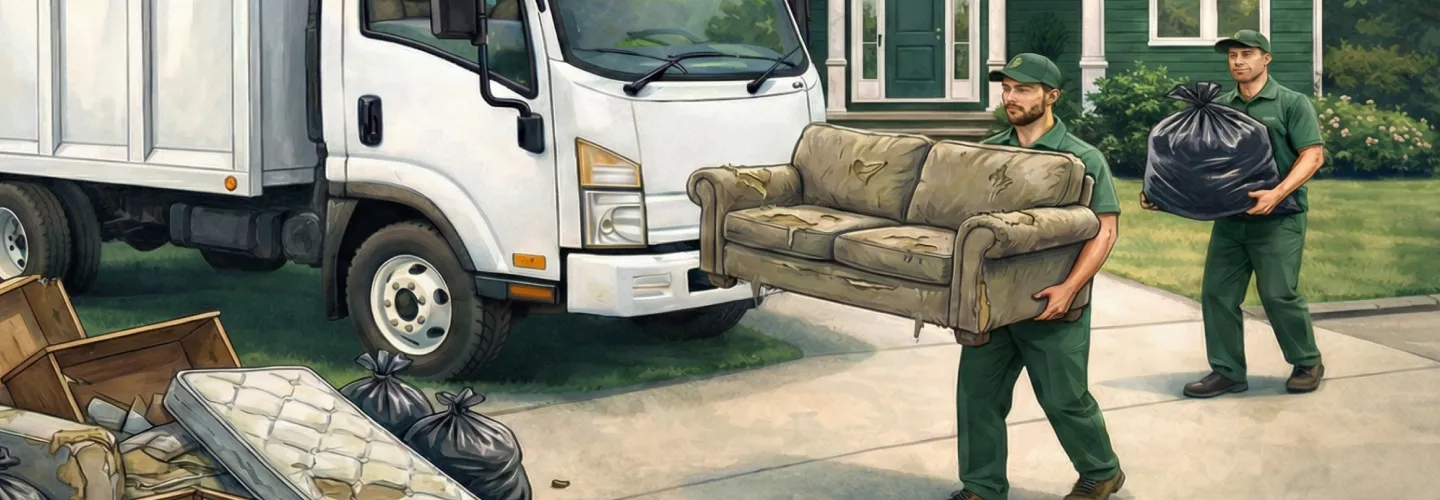
Milton Electronics Recycling Services
Choose our electronics recycling service for secure, eco-friendly disposal of your old devices—protecting your data and the environment while supporting a cleaner community.
Get a Free QuoteOur Milton Junk Removal Services
Electronics Recycling in Milton, GA – Local Service Guide
Electronics recycling in Milton, GA is essential for keeping neighborhoods like Crabapple, White Columns, and The Manor clean and environmentally responsible. Residents often need to recycle electronics during spring cleanouts, home upgrades, or when replacing outdated devices. In Milton, local weather and property layouts can affect logistics—larger items may require special pickup or drop-off, especially during rainy seasons or in homes with long driveways. For residential spaces such as garages and basements, electronics often accumulate after storms or seasonal decluttering, with city trash schedules and yard cycles influencing timing. Commercial properties in areas like Birmingham Crossroads and Deerfield often require discreet, scheduled pickups to handle higher volumes from offices, retail, or hospitality sectors. Specialty projects—such as estate cleanouts or construction debris removal—demand careful planning and coordination, particularly for properties with limited access or unique layouts. For guidance on local recycling rules and resources, visit the Milton Environmental Programs & Sustainability page.
Benefits of Electronics Recycling in Milton
Eco-Friendly Disposal Solutions
Secure Data Destruction
Convenient Local Drop-Off
Certified Recycling Processes
Compliance With Environmental Regulations
Support for Community Sustainability
Coordinating Electronics Recycling with Milton's Environmental Programs and Public Works
Milton residents seeking to dispose of outdated computers, televisions, monitors, and other electronic devices must follow proper recycling channels to ensure environmental compliance. The City of Milton's Environmental Programs and Sustainability division provides guidance on responsible e-waste disposal, including directing residents to authorized collection events and certified recycling facilities within Fulton County. Electronics contain hazardous components—including lead, mercury, cadmium, and lithium batteries—that require specialized handling to prevent soil and groundwater contamination.
Key steps for Milton residents include:
- Separate e-waste from regular trash before placing items at the curb; electronics are not accepted through standard residential waste collection
- Remove personal data from all computers, tablets, and smartphones prior to recycling
- Do not place CRT monitors or televisions in household garbage bins
- Contact Fulton County for scheduled household hazardous waste and e-waste collection events
- Retain rechargeable batteries for separate drop-off at designated retail or municipal collection points
Milton Environmental Programs & Sustainability
2006 Heritage Walk, Milton, GA 30004
Phone: (678) 242-2500
Official Website: Milton Environmental Programs & Sustainability
Georgia's Electronic Waste Regulations and Disposal Requirements for Milton Residents
Georgia does not currently enforce a statewide landfill ban on electronics or operate a mandatory Extended Producer Responsibility (EPR) program for e-waste. However, the Georgia Environmental Protection Division (GA EPD) regulates solid waste management under the Georgia Comprehensive Solid Waste Management Act (O.C.G.A. § 12-8-20 et seq.), which establishes standards for proper handling and disposal of materials containing hazardous substances. Electronics that contain mercury switches, lead solder, or lithium-ion batteries may be classified as hazardous waste if improperly managed.
Important regulatory considerations include:
- Cathode ray tube (CRT) devices contain lead and must be handled as universal waste under EPA RCRA guidelines if generated in commercial quantities
- Lithium-ion batteries pose fire risks in waste streams and should never be placed in curbside recycling or trash
- Businesses generating e-waste in large volumes may be subject to hazardous waste generator requirements under Georgia Rules Chapter 391-3-11
- Illegal dumping of electronics is subject to code enforcement action and fines under Milton's municipal ordinances
Georgia Environmental Protection Division
2 Martin Luther King Jr. Drive SE, Suite 1456, Atlanta, GA 30334
Phone: (404) 656-4713
Official Website: Georgia Environmental Protection Division
Data Security and Hard Drive Destruction for Milton Business Electronics Disposal
Proper electronics recycling extends beyond environmental compliance to include data security obligations. Milton businesses, medical practices, and financial institutions must ensure that all sensitive data stored on hard drives, solid-state drives, servers, and mobile devices is permanently destroyed before equipment leaves the premises. Federal regulations such as HIPAA, FACTA, and the Gramm-Leach-Bliley Act impose strict data destruction requirements on covered entities.
Best practices for secure electronics disposal include:
- Obtain a Certificate of Destruction from any recycling vendor confirming data has been permanently erased or physically destroyed
- Use NIST 800-88 compliant methods for data sanitization, including degaussing, overwriting, or physical shredding of storage media
- Maintain chain-of-custody documentation tracking devices from removal through final destruction
- Verify R2 or e-Stewards certification for any electronics recycler handling business equipment
- Remove all proprietary labels and asset tags before transferring equipment to third-party processors
Milton's Community Development Department can provide guidance on business licensing requirements for commercial electronics recycling haulers operating within city limits.
Fulton County E-Waste Collection Resources Available to Milton Residents
As an incorporated city within Fulton County, Milton residents have access to county-level recycling infrastructure for electronics disposal. Fulton County periodically hosts household hazardous waste and electronics collection events where residents can drop off computers, printers, televisions, cell phones, and other covered devices at no charge. These events typically require proof of Fulton County residency, such as a valid driver's license or utility bill.
Accepted electronics at county collection events generally include:
- Computers and laptops (desktops, towers, keyboards, mice, cables)
- Monitors and televisions (CRT, LCD, LED, and plasma displays)
- Printers, scanners, and fax machines
- Cell phones, tablets, and handheld devices
- Small consumer electronics (DVD players, gaming consoles, routers, modems)
- Cables, chargers, and peripheral accessories
Items typically not accepted include large appliances with refrigerants, smoke detectors, and medical devices. Residents should check the Fulton County website or contact the Milton Public Works Department for upcoming event dates, locations, and any item restrictions.
Milton Public Works Department
2006 Heritage Walk, Milton, GA 30004
Phone: (678) 242-2500
Official Website: Milton Public Works Department
Stormwater and Environmental Protection During Electronics Handling in Milton
Improper storage or disposal of electronic equipment poses environmental risks that intersect with Milton's stormwater management regulations. Circuit boards, batteries, and CRT glass contain heavy metals that can leach into soil and enter the municipal stormwater system during rain events. Milton's Stormwater Management program enforces pollution prevention measures to protect local watersheds, including Big Creek and the Chattahoochee River corridor.
Residents and businesses should observe the following precautions:
- Store e-waste indoors or under cover to prevent rainwater contact with exposed circuit boards and batteries
- Never disassemble electronics outdoors where small components, solder fragments, or battery acid could reach storm drains
- Report illegal dumping of electronics in ditches, streams, or wooded areas to Milton Code Enforcement or the Milton Police Department
- Businesses accumulating e-waste must comply with Georgia's solid waste storage requirements, including containment and labeling
- Contractors performing renovations in pre-1978 structures should follow EPA Lead-Safe Renovation Rules when removing old wiring and electronic fixtures
What Neighborhoods Do We Serve Throughout Milton, GA?
- Crabapple: This historic crossroads community features a mix of older homes and newer developments along Birmingham Highway. Residents upgrading legacy home office equipment or replacing outdated entertainment systems should coordinate e-waste removal carefully given narrow two-lane road access in the village center.
- Birmingham Crossroads: Large-lot residential properties in this area often accumulate electronics in garages and outbuildings over time. Long driveways and rural-character roads require advance scheduling to ensure efficient pickup logistics for bulk e-waste loads.
- Deerfield: This established subdivision features single-family homes with standard driveway access. Frequent technology upgrades among families generate steady volumes of computers, gaming consoles, and peripheral devices requiring proper recycling.
- Cogburn Road Corridor: A mix of residential subdivisions and proximity to commercial areas along Cogburn Road creates both household and small-business electronics recycling demand. HOA guidelines in several communities may restrict curbside staging of e-waste.
- Freemanville / Arnold Mill: Properties in this western Milton corridor tend toward larger acreage with equestrian and agricultural character. Estate cleanouts and home office decommissioning projects in this area may involve significant volumes of outdated electronics requiring coordinated removal.
- Windward / North Milton: Newer planned communities near the Alpharetta border feature modern construction with dedicated home offices and media rooms. High concentrations of networking equipment, smart home devices, and computer hardware are common recycling items in these neighborhoods.